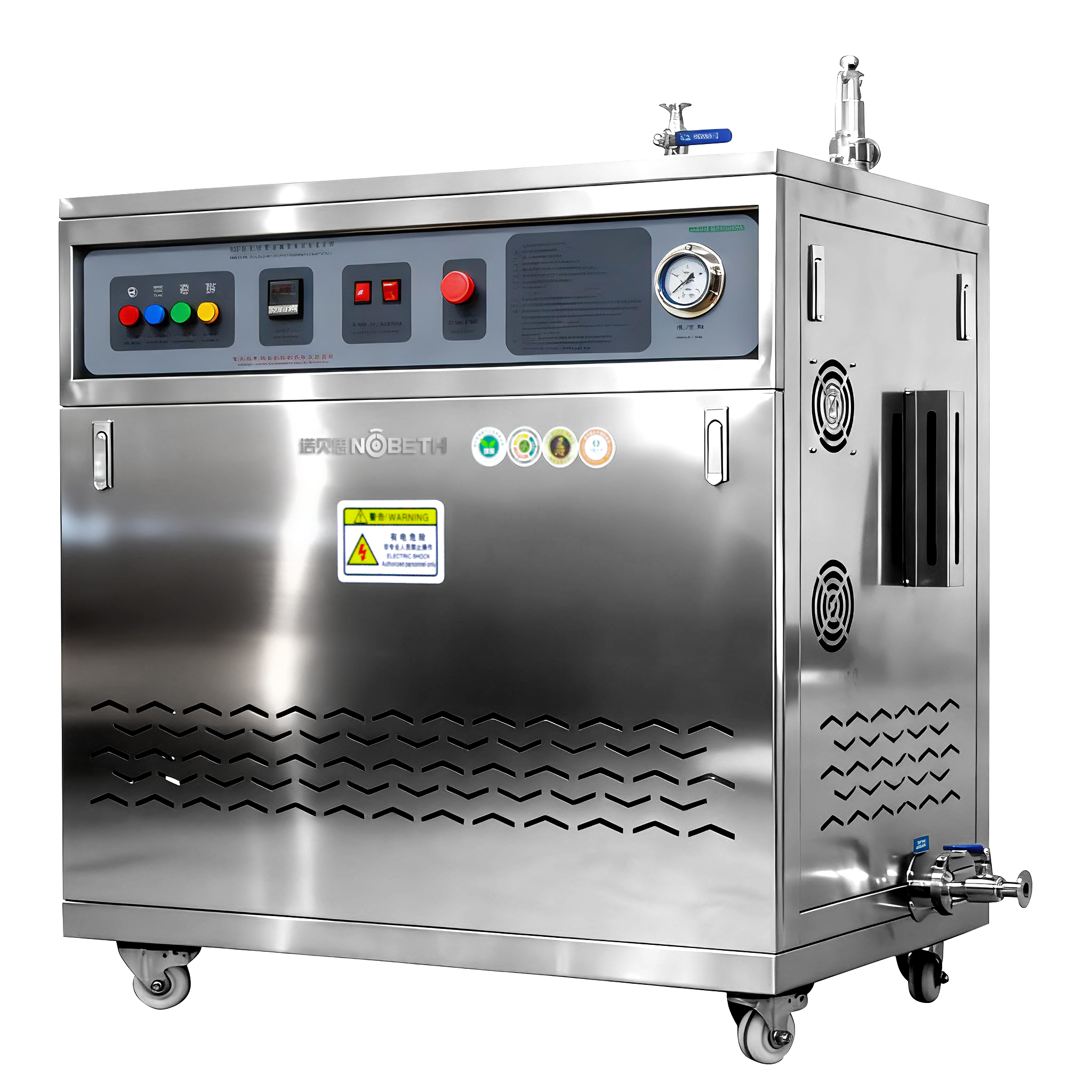
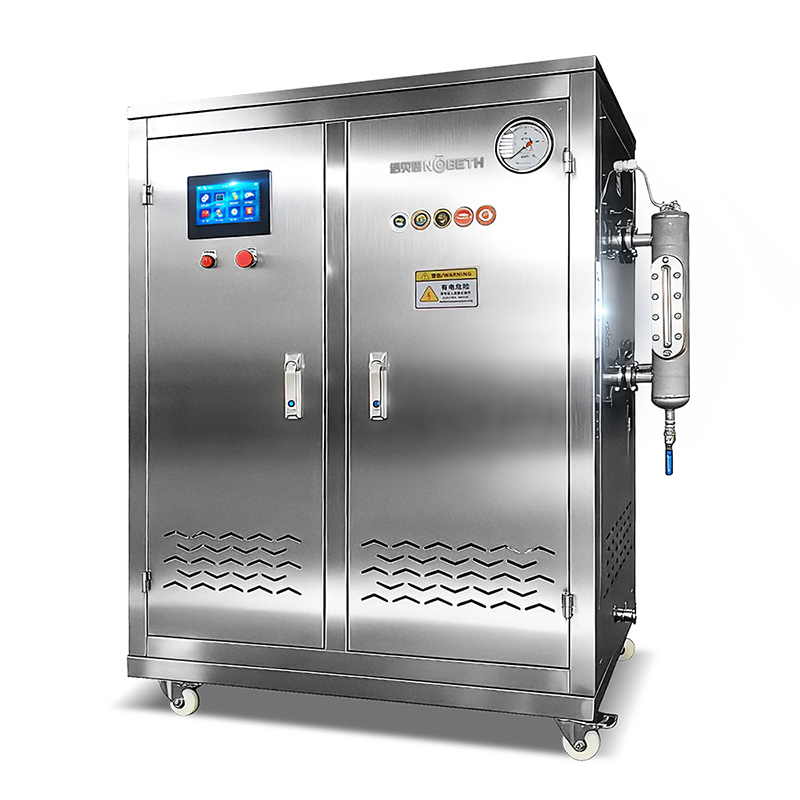
Electric Clean Steam Generator | 316L Sanitary Steam Solution | NOBETH
Electric Clean Steam Generator for Hygienic Industrial Processes
Steam is widely used for heating, cooking, sterilization, cleaning, humidification, and temperature control. However, ordinary industrial steam may not be suitable when steam comes into direct or indirect contact with food, production equipment, sanitary pipelines, packaging materials, or sterilized surfaces.
Conventional plant steam may contain rust, scale, excessive moisture, boiler-water treatment residues, oil, or impurities from carbon steel pipelines. These contaminants can affect product quality, equipment cleanliness, sterilization consistency, and production stability.
An electric clean steam generator produces steam from treated feedwater through a dedicated and controlled system. It provides an independent steam source for factories requiring hygienic steam without installing a fuel-fired boiler or connecting sensitive production equipment directly to an ordinary plant-steam network.
NOBETH designs and manufactures electric clean steam generators for food processing, beverage production, dairy plants, medical device sterilization, laboratories, cosmetics production, and other hygiene-sensitive industrial applications.
The system can be customized according to steam capacity, working pressure, voltage, feedwater quality, stainless steel material, control method, and production process.
What Is an Electric Clean Steam Generator?
An electric clean steam generator uses electric heating elements to convert treated water into clean process steam.
Unlike a conventional carbon steel boiler, a clean steam system focuses on reducing contamination risks throughout the complete steam-generation process.
A typical electric clean steam generation system may include:
- Feedwater treatment equipment
- Stainless steel feedwater tank
- High-pressure feedwater pump
- Electric clean steam generator
- Sanitary steam separator
- Steam filter
- Pressure-control system
- Flow-control system
- Sanitary valves and pipelines
- Steam distribution header
- Condensate drainage system
The exact system configuration depends on the final application and required steam quality.
For example, steam used only for indirect jacket heating may require a different system from steam injected directly into food or used to sterilize sanitary equipment.
How Does an Electric Clean Steam Generator Work?
The process begins with treated feedwater.
Depending on the local water quality and process requirements, the raw water may pass through a water softener, precision filter, activated carbon filter, reverse osmosis system, or another purification process.
The treated water is then stored in a clean feedwater tank and automatically delivered to the steam generator.
Electric heating elements transfer energy to the water inside the steam chamber. As the water reaches its boiling point, steam is generated and passes through a steam-water separation process.
A typical system flow is:
Treated Water
→ Stainless Steel Water Tank
→ Electric Clean Steam Generator
→ Sanitary Steam Separator
→ Steam Filter
→ Pressure and Flow Control
→ Production Equipment
The steam separator helps remove entrained water droplets. Where additional particle control is required, a sanitary steam filter can be installed before the production equipment.
This independent process helps reduce the risk of impurities from an ordinary boiler or old plant-steam pipeline entering hygiene-sensitive production lines.
Why Choose Electric Heating?
Electric clean steam generators are suitable for factories that need independent, controllable steam production.
Compared with fuel-fired systems, electric heating offers several practical advantages.
No On-Site Combustion
An electric clean steam generator does not require a burner, fuel tank, gas pipeline, or combustion exhaust system.
This makes it suitable for:
- Clean production areas
- Laboratories
- Indoor installations
- Factories without a boiler room
- Facilities where fuel storage is restricted
- Projects requiring compact installation
Precise Automatic Control
Electric heating elements can be controlled in stages according to pressure and steam demand.
Depending on the configuration, the system can automatically manage:
- Water feeding
- Heating
- Steam pressure
- Water level
- Operating temperature
- Pump operation
- Alarm conditions
- System start and stop
This helps maintain a stable steam supply and reduces dependence on manual operation.
Rapid Start-Up
Electric steam generators generally do not require the same combustion preparation process as fuel-fired boilers.
The actual heating time depends on:
- Equipment power
- Water volume
- Feedwater temperature
- Required pressure
- Steam-generator design
- Operating conditions
A properly selected system can provide steam quickly for intermittent production, laboratory work, sterilization cycles, and small or medium production lines.
Clean Installation Environment
Because there is no fuel combustion at the equipment location, electric heating avoids local combustion fumes and burner-related contamination.
However, the cleanliness of the final steam still depends on feedwater quality, steam-contact materials, separation, filtration, pipelines, drainage, and equipment maintenance.
SS316L Stainless Steel Construction
For applications with higher hygiene and corrosion-resistance requirements, the parts that contact feedwater, clean steam, and condensate can be manufactured from SS316L stainless steel.
SS316L is commonly used in sanitary processing systems because it provides:
- Good corrosion resistance
- Smooth and cleanable surfaces
- Reduced risk of rust contamination
- Compatibility with treated water
- Suitability for sanitary valves and pipelines
- Reliable performance in hygiene-sensitive environments
Depending on the project, SS316L may be used for:
- Steam chamber components
- Feedwater-contact components
- Steam outlet pipes
- Steam separators
- Valves and fittings
- Water tanks
- Condensate-contact parts
- Sanitary pipeline connections
A supplier should clearly identify which components are made from SS316L.
A quotation stating only that the equipment is “stainless steel” is not sufficiently detailed. Some systems may combine SS316L, SS304, carbon steel, and other materials in different sections.
The final material configuration should be confirmed according to:
- Feedwater quality
- Steam-contact conditions
- Product sensitivity
- Cleaning method
- Corrosion risk
- Operating pressure
- Customer quality standards
Water and Electrical System Separation
Water and electricity operate inside the same overall system, so equipment layout and electrical protection are important.
NOBETH electric clean steam generators can be configured with separated electrical-control and water-handling sections.
This arrangement helps support:
- Clear separation of functional areas
- Easier inspection and maintenance
- Reduced moisture exposure for control components
- Safer access to electrical parts
- More convenient component replacement
- Better organization of cables and pipelines
The exact design and protection level should be confirmed according to the selected model and installation environment.
Steam-Water Separation
Steam generated inside a steam chamber may carry small water droplets.
If excessive moisture enters the production line, it can affect:
- Heating efficiency
- Sterilization consistency
- Direct steam injection
- Product moisture
- Pipeline operation
- Condensate formation
- Equipment cleanliness
A properly designed clean steam system should include effective steam-water separation.
For more demanding applications, the system may use:
- Internal steam-water separation
- External sanitary separator
- Steam filter
- Automatic condensate discharge
- Pressure stabilization
- Drainable steam pipelines
Steam dryness should be evaluated according to the final process rather than relying only on the rated steam capacity.
Feedwater Treatment
Feedwater quality is one of the most important factors affecting clean steam quality and equipment service life.
Untreated hard water can cause scale on heating elements and inside the steam chamber. High chloride content may also increase corrosion risk in certain operating conditions.
Depending on the raw water analysis, the system may include:
- Water softener
- Quartz sand filter
- Activated carbon filter
- Precision filter
- Reverse osmosis system
- Purified water tank
- Stainless steel feedwater pump
Water Softener
A water softener mainly reduces calcium and magnesium hardness.
It helps:
- Reduce scale formation
- Protect heating elements
- Extend maintenance intervals
- Improve heat-transfer stability
Reverse Osmosis System
A reverse osmosis system removes a wider range of dissolved substances.
It may be recommended for:
- Direct food-contact steam
- Higher hygiene requirements
- Sensitive production processes
- Applications requiring lower conductivity
- Systems using SS316L sanitary components
Not every electric clean steam generator requires an RO system. The correct water treatment configuration should be selected according to the raw water report and required steam quality.
Main Applications
Electric Clean Steam Generator for Food Processing
Clean steam can be used in food factories for:
- Direct steam injection
- Food cooking
- Meat processing
- Vegetable blanching
- Sauce and soup heating
- Grain cooking
- Mixing and emulsification
- Jacketed vessel heating
- Tank sterilization
- Pipeline cleaning
- Packaging-line treatment
When steam directly contacts food, the complete system should be evaluated.
Important considerations include:
- Feedwater quality
- SS316L steam-contact components
- Steam filtration
- Steam dryness
- Boiler-water chemical control
- Sanitary pipelines
- Condensate drainage
Direct Steam Injection
Direct steam injection heats products by introducing steam directly into a liquid or food material.
Common applications include:
- Cheese melting
- Dairy heating
- Sauce preparation
- Soup production
- Beverage heating
- Starch cooking
- Mixing and emulsification
Because the steam becomes part of the production process, the quality of the steam and feedwater is especially important.
Dairy and Beverage Processing
Clean steam can support:
- Milk heating
- Cheese processing
- Yogurt production
- Cream processing
- Beverage heating
- Syrup preparation
- Mixing-tank sterilization
- Filling-line cleaning
- Pipeline sterilization
- Bottle and cap treatment
Stable steam pressure helps maintain consistent heating conditions and reduce production variation.
Medical Device Sterilization
An electric clean steam generator can provide steam for:
- Sterilization chambers
- Medical instrument sterilizers
- Equipment-cleaning systems
- Laboratory sterilizers
- Pipeline sterilization
- Chamber heating
The required steam specification should be confirmed according to the sterilizer design, process requirements, validation plan, and applicable local standards.
A clean steam generator should not automatically be described as a pharmaceutical pure steam system unless its feedwater, material, surface finish, drainage, condensate quality, documentation, and validation requirements meet the relevant project specification.
Laboratory Applications
Compact electric clean steam generators are suitable for laboratories and pilot production facilities.
Typical applications include:
- Autoclaves
- Small sterilization chambers
- Research reactors
- Pilot production
- Clean equipment washing
- Humidification
- Temperature-controlled experiments
Electric heating is particularly useful where accurate control, compact installation, and independent steam production are required.
Cosmetics and Personal Care Production
Clean steam may be used for:
- Mixing-vessel heating
- Emulsification
- Tank sterilization
- Pipeline cleaning
- Process-temperature control
- Hygiene-sensitive humidification
A separate electric clean steam system helps isolate sensitive production equipment from the factory’s ordinary plant-steam network.
Clean Steam vs. Plant Steam
Plant steam is produced by a conventional industrial boiler and is generally used for factory heating, cleaning, humidification, and utility applications.
During generation and distribution, plant steam may come into contact with:
- Carbon steel boiler components
- Boiler-water treatment chemicals
- Old pipelines
- Rust
- Oil
- Scale
- Trapped condensate
Clean steam is produced in a dedicated system using treated water and selected steam-contact materials.
It is intended for processes where contamination control is more important.
The correct choice depends on whether steam directly contacts:
- Food
- Product ingredients
- Packaging
- Sterilized equipment
- Sanitary pipelines
- Sensitive production surfaces
Clean Steam vs. Pure Steam
Clean steam and pure steam are related, but they should not automatically be treated as identical.
Clean steam is generally used in food processing, cosmetics, laboratories, medical device sterilization, and other hygiene-sensitive industrial processes.
Pure steam normally represents a more strictly controlled steam grade.
A pure steam system may have higher requirements for:
- Feedwater quality
- SS316L material scope
- Internal surface finish
- Welding quality
- System drainage
- Condensate quality
- Instrumentation
- Testing
- Documentation
- Process validation
The correct steam grade should be selected according to the customer’s actual process and regulatory requirements.
Choosing a higher steam grade than necessary may increase investment. Choosing an insufficient steam grade may create product-quality or compliance risks.
How to Select the Correct Capacity
Steam-generator capacity is normally expressed in kilograms of steam per hour.
The required capacity should be calculated from the actual production process.
Important information includes:
- Product type
- Production output per hour
- Initial product temperature
- Target temperature
- Heating time
- Tank volume
- Sterilization cycle
- Number of connected machines
- Simultaneous steam demand
- Pipeline heat loss
- Future expansion plans
Selecting equipment only according to electrical power may result in:
- Insufficient steam output
- Slow heating
- Unstable pressure
- Excessive electricity consumption
- Frequent equipment cycling
- Production delays
When the required steam capacity is unknown, NOBETH can calculate a preliminary demand based on the production data and connected equipment.
Voltage and Electrical Requirements
Before ordering an electric clean steam generator, buyers should confirm:
- Voltage
- Phase
- Frequency
- Available electrical capacity
- Main cable specification
- Local electrical standard
- Required control voltage
- Installation environment
Common industrial power supplies may include:
- 380 V, three-phase, 50 Hz
- 400 V, three-phase, 50 Hz
- 415 V, three-phase, 50 Hz
- 440 V, three-phase, 60 Hz
- Customized industrial voltage
The final electrical configuration should be confirmed before production.
High-power electric steam generators may require significant factory electrical capacity. The customer should verify the available transformer and distribution-system capacity before selecting the model.
Automatic Control and Safety Protection
Depending on the project, the NOBETH electric clean steam generator can be configured with:
- PLC control
- Touchscreen HMI
- Automatic water feeding
- Automatic heating control
- Pressure monitoring
- Temperature monitoring
- Water-level control
- Low-water protection
- Overpressure protection
- Pump protection
- Alarm display
- Emergency stop
- Communication interface
- Remote-monitoring capability
The required communication protocol and remote-control functions should be agreed in the technical specification before production.
Typical Electric Clean Steam System Configuration
A complete system may include:
- Raw water supply
- Water softener or RO system
- Stainless steel feedwater tank
- Feedwater pump
- Electric clean steam generator
- Sanitary steam separator
- Steam filter
- Pressure-control valve
- Flow-control system
- Steam distribution header
- Sanitary steam pipeline
- Condensate drainage system
- Production equipment
NOBETH can provide a standalone electric clean steam generator or a complete system solution according to the production process and factory layout.
How to Compare Electric Clean Steam Generator Suppliers
When requesting quotations, buyers should compare more than the machine price.
Material Scope
Ask the supplier to identify which components are manufactured from:
- SS316L
- SS304
- Carbon steel
- Copper
- Other materials
Rated Steam Output
Confirm whether the stated steam output is based on actual operating tests and under what feedwater and pressure conditions.
Working and Design Pressure
The quotation should distinguish between:
- Normal operating pressure
- Maximum working pressure
- Design pressure
- Safety-valve setting
- Required outlet pressure
Water Treatment
The supplier should recommend water treatment according to an actual water report rather than using one standard configuration for all projects.
Steam Treatment
Confirm whether the quotation includes:
- Steam separator
- Steam filter
- Pressure-reducing valve
- Flow-control valve
- Condensate discharge
- Steam header
Electrical Components
Check:
- Heating-element material
- Control components
- Electrical protection
- Cable requirements
- PLC brand
- Communication interface
- Replacement-parts availability
Factory Testing
Buyers may request:
- Pressure testing
- Water-feeding testing
- Heating testing
- Alarm testing
- Safety-protection testing
- Continuous-operation testing
- Steam-output testing
- Factory acceptance testing
Documentation
A complete project may require:
- Technical datasheet
- General arrangement drawing
- System flow diagram
- Electrical diagram
- Operation manual
- Maintenance instructions
- Material documentation
- Inspection records
- Applicable certificates
Why Choose a NOBETH Electric Clean Steam Generator?
NOBETH specializes in steam generators and complete steam system solutions.
Rather than recommending equipment based only on power, the NOBETH technical team evaluates:
- Steam application
- Required capacity
- Working pressure
- Feedwater quality
- Direct-contact conditions
- Electrical supply
- Production-equipment connections
- Pipeline arrangement
- Condensate drainage
- Installation environment
NOBETH can provide:
- Electric clean steam generators
- SS304 and SS316L material options
- Customized steam capacity
- Customized pressure
- Customized voltage and frequency
- Water-treatment systems
- Stainless steel water tanks
- Sanitary steam separators
- Steam filters
- Pressure and flow control
- PLC and touchscreen control
- System flow diagrams
- Factory testing
- Operation manuals
- Installation guidance
- OEM and ODM services
The final material, steam quality, electrical configuration, operating parameters, and included accessories should be confirmed in the project technical agreement.
Frequently Asked Questions
What is an electric clean steam generator?
It is a dedicated steam system that uses electric heating to generate steam from treated water for hygiene-sensitive production processes.
Is SS316L required for every clean steam generator?
No. SS316L is commonly selected for higher hygiene requirements, direct-contact processes, and applications requiring improved corrosion resistance.
The correct material depends on water quality, steam quality, cleaning methods, and customer standards.
Does an electric clean steam generator require RO water?
Not always.
Some applications may use softened water, while direct-contact or higher-cleanliness processes may require reverse osmosis or purified water.
Can clean steam directly contact food?
A clean steam system can be designed for direct food-contact applications.
The complete system must consider feedwater quality, steam-contact materials, filtration, steam dryness, pipeline cleanliness, condensate drainage, and applicable food-safety requirements.
Can one generator supply several machines?
Yes.
A steam distribution header can supply several machines if the total simultaneous steam demand, pressure requirements, and pipeline losses are calculated correctly.
Is an electric clean steam generator expensive to operate?
Operating cost depends on:
- Local electricity price
- Steam capacity
- Operating hours
- Feedwater temperature
- Working pressure
- Insulation
- Steam demand
- Heat recovery
- Equipment control strategy
Electric heating is generally more suitable where electricity is available, steam demand is moderate, and independent clean operation is important.
How quickly can an electric clean steam generator produce steam?
Start-up time depends on the equipment power, internal water volume, initial water temperature, operating pressure, and system design.
The exact value should be confirmed from the selected model’s technical data and factory test.
What determines the electric clean steam generator price?
The main factors include:
- Steam capacity
- Working pressure
- SS304 or SS316L material
- Heating power
- Voltage and frequency
- Water-treatment equipment
- Steam separator and filter
- PLC control
- Instrumentation
- Pipeline components
- Level of customization
Request an Electric Clean Steam Generator Quotation
To prepare an accurate model recommendation and quotation, please provide:
- Industry and application
- Whether steam directly contacts the product
- Required steam capacity
- Working pressure
- Operating temperature
- Feedwater condition
- Voltage, phase, and frequency
- Available electrical capacity
- Number of connected machines
- Installation country
- Available installation space
- Required stainless steel material
Based on this information, NOBETH can prepare a suitable electric clean steam generator configuration, system flow diagram, technical specification, and quotation for your project.